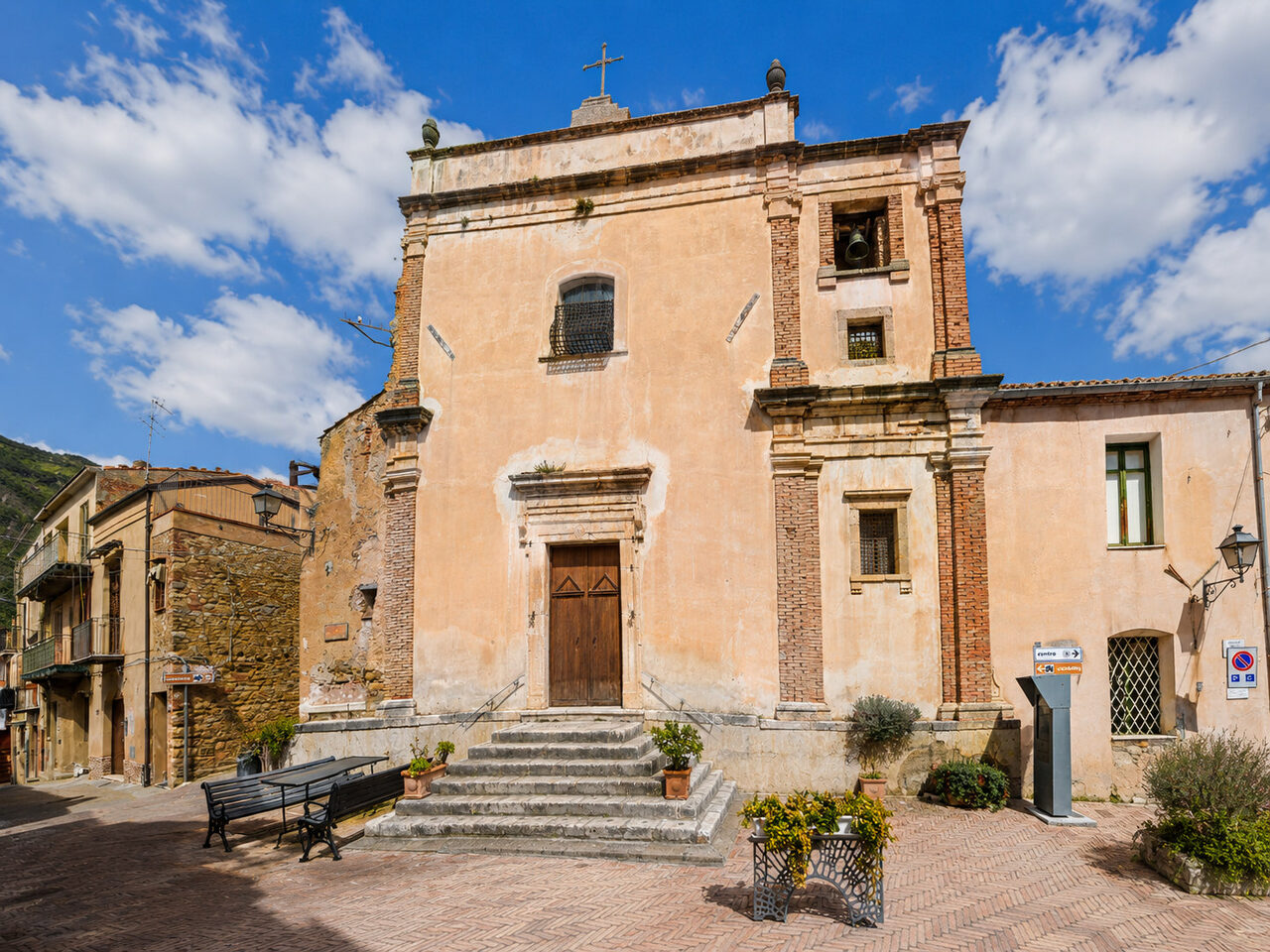
The Church of Saints Sebastian and Fabian was probably founded in the later 15th century just outside the old walls, below the Bagherino quarter and beside one of the former access gates. Its entrance portal is dated 1646.
A mid-19th-century remodelling created the present single nave and four chapels. The church preserves Giuseppe Testa's signed 1797 Madonna with Saints John of the Cross and Teresa of Ávila, a 16th-century Dead Christ in a late-19th-century wooden urn still carried on Good Friday, and a 16th-century statue of Saint Sebastian.
It is also called the Church of the Collegio because the Collegio di Maria was founded in the adjoining building in 1748. Earlier it was the seat of the 17th-century literary Accademia degli Offuscati.
NoteExterior always visible. Interior depends on opening hours.
Founded in the late 15th century below Bagherino’s old walls, beside one of the former access gates; entrance portal dated 1646.
Above the church, the old Bagherino quarter preserves the steep, narrow lanes of Collesano’s earliest Norman borough.
1797 canvas signed by Giuseppe Testa of Palermo.
A 16th-century Dead Christ in a 19th-century urn is still carried in the Good Friday procession.
Hosts the Good Friday processions "A Cerca" and "Morte e Passione".
Historically the seat of the Accademia degli Offuscati, a 17th-century literary academy.
From the local historical guide
Probably founded in the second half of the 15th century, the church stands below the old walls of the Bagherino quarter beside one of the former access gates. Its carved-stone portal is dated 1646; the four side chapels belong to a mid-19th-century remodelling.
The chapels contain an 18th-century Saint Michael, Giuseppe Testa’s signed Madonna and Child with Saints John of the Cross and Teresa of Ávila of 1797, a 16th-century Dead Christ still carried on Good Friday, and a 16th-century wooden Saint Sebastian.
The local Accademia degli Offuscati elected its new “Prince” here during Saint Sebastian’s feast. The Collegio di Maria, attached in 1748, once ran an embroidery school probably responsible for the church’s three fine 19th-century silk, silver and gold altar frontals.
Above the church, Bagherino is Collesano’s oldest urban nucleus: the walled Norman borough preserves steep, narrow lanes, traces of the Porta della Terra and the approach to the castle plateau.
Timeline
c.1406–08A wooden “Mourners” group (Virgin and St John), attributed to Francesco di Valdambrino and commissioned by Antonio Ventimiglia, is made.
1646The date carved on the entrance portal — the only firm construction date (the foundation is older but undocumented).
1688An anonymous painter makes the town view for Pietro Agliata, administrator of the Immaculate Conception Chapel; it is now kept in the Mother Church.
1693The Val di Noto earthquake ruins the castle, making the 1688 panorama the only image of the earlier town.
1797Giuseppe Testa of Palermo signs an altar canvas (Madonna with Sts John of the Cross and Teresa of Ávila).
late 19th c.The 16th-century Dead Christ is placed in the wooden urn still used in the Good Friday procession.
People & families
Pietro Agliata— administrator of the Immaculate Conception Chapel who commissioned the anonymous 1688 town view now kept in the Mother Church.
Giuseppe Testa— Palermo painter who signed the 1797 altar canvas.
Francesco di Valdambrino— Sienese sculptor to whom the wooden “Mourners” group (c.1406–08), commissioned by Antonio Ventimiglia, is attributed.
domina Adelicia— described by the local guide as Roger II’s niece and a feudatory of Collesano after the Norman settlement was founded; she is not identified there as the castle’s founder.
Stories & traditions
The lower half of the 1688 painting is, in effect, a photograph taken before photography — the churches and castle of Collesano as they stood before the 1693 earthquake.
The church is the engine of Holy Week: the dawn “A Cerca” Via Crucis (the Christ falling three times) and the evening “Morte e Passione” procession both set out from here on Good Friday.
It was the seat of the 17th-century literary Accademia degli Offuscati; on St Sebastian’s feast it hosted the election of the academy’s “Prince”.
Its other name, “del Collegio”, comes from the Collegio di Maria founded in the adjoining building in 1748; the ensemble supported schooling and refined embroidery.
Visiting
HoursOpened for Holy Week processions and feast days
AdmissionFree
AccessStreet-level portal; single-nave interior is level.