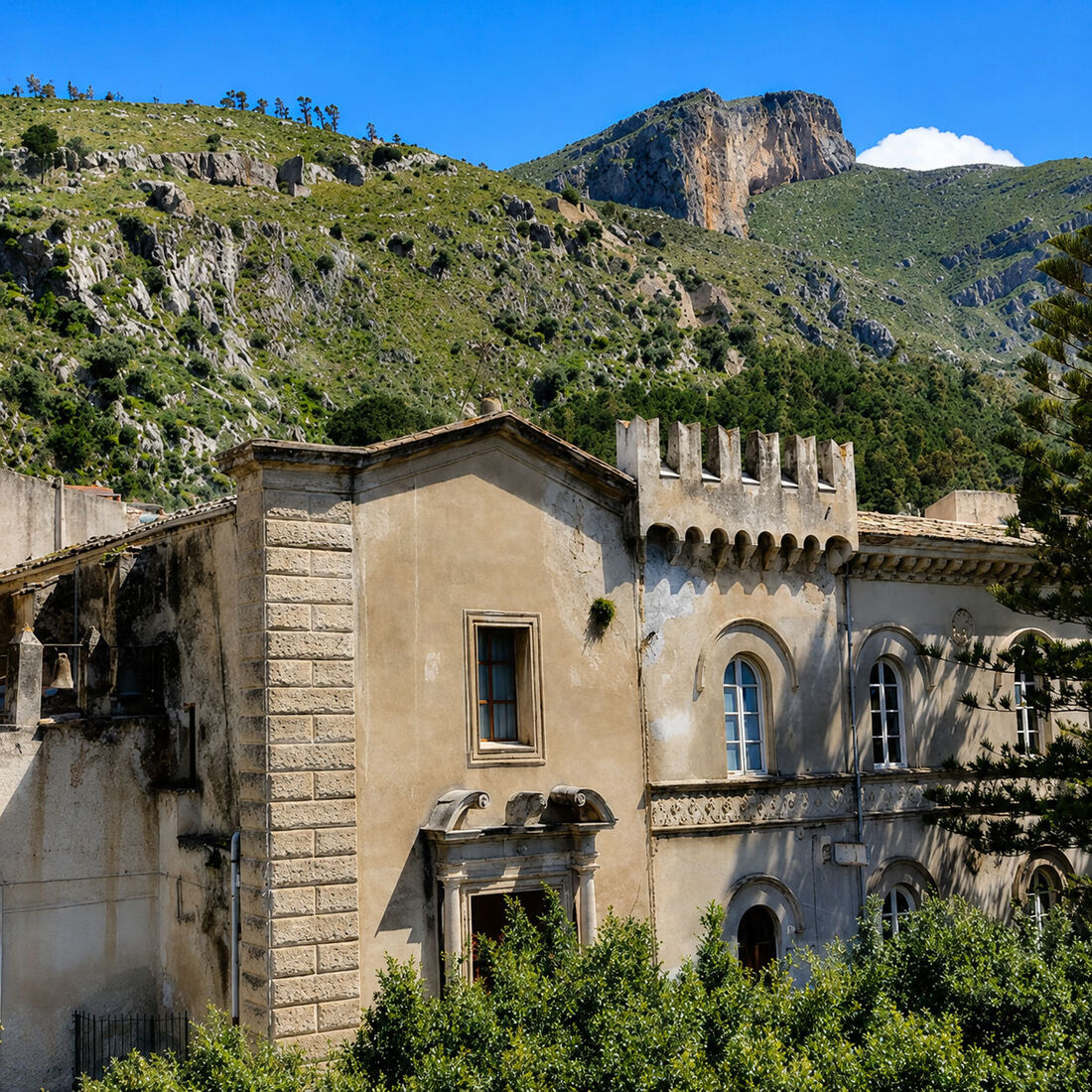
The Church of San Domenico is also known as Annunziata Nuova, distinguishing it from the older Annunziata near the cemetery. It was built around 1552–1558 by Countess Susanna Gonzaga and the Universitas of Collesano, radically rebuilt in 1802–1804, and given its present façade in the late 1920s.
Its eight chapels preserve Gaspare Bazzano's 1623 Madonna of the Rosary, paintings by Giovan Giacomo Lo Varchi, an early-16th-century Annunciation group from the Annunziata Vecchia, and Giancola Viviano's wooden Madonna of the Rosary of 1648.
The wall tomb of Antonio Ventimiglia and Elvira Moncada came from the lost church of San Francesco, not San Giacomo. It is probably early-15th-century Tuscan work, with later parts made by Lo Varchi. The active Rosary confraternity was founded here in 1574.
NoteExterior always visible. Interior depends on opening hours.
Built c.1552–1558 by Susanna Gonzaga and the Universitas of Collesano; radically rebuilt in 1802–1804.
Pietro Cardona is buried here — he died at the Battle of Bicocca on 29 April 1522.
Originally entrusted to the Dominicans; the convent next door is now the Palazzo Municipale (Stop 5).
Holds the "Madonna del Rosario e Santi" (1623) by Gaspare Vazzano "Zoppo di Gangi", commissioned by the Confraternity of the Most Holy Rosary.
Also called "Annunziata Nuova" or "del Rosario" — the Confraternity ties it to the venerated Madonna del Rosario cult.
From the local historical guide
The Annunziata Nuova was built around 1552–58 by Countess Susanna Gonzaga and the Universitas of Collesano, then radically rebuilt in 1802–04. Its current façade dates from the late 1920s.
Its eight chapels preserve Gaspare Bazzano’s 1623 Madonna of the Rosary, paintings by Giovan Giacomo Lo Varchi, an early-16th-century Annunciation group from the Annunziata Vecchia, and Giancola Viviano’s wooden Madonna of the Rosary of 1648.
The wall tomb of Antonio Ventimiglia and Elvira Moncada came from the lost church of San Francesco. The guide identifies it as probable early-15th-century Tuscan work, with some parts made by Lo Varchi in the later 17th century; the active Rosary confraternity was founded in 1574.
The separate Annunziata Vecchia was founded around the mid-15th century and later occupied by the Capuchins. It preserves locally painted 18th-century ceramic floors and kept Collesano’s Madonna dei Miracoli until 1845; church and convent ruins were restored in 2014.
Timeline
early 15th c.The wall tomb of Antonio Ventimiglia and Elvira Moncada, probably Tuscan work, comes from the lost church of San Francesco; later parts were made by Giovan Giacomo Lo Varchi.
1522Count Pietro II Cardona, killed at the Battle of Bicocca, is buried here.
1552–1558The church is built by Countess Susanna Gonzaga and entrusted to the Dominicans (their convent is now the Town Hall).
1623Gaspare Vazzano “Zoppo di Gangi” paints the “Madonna del Rosario and Saints” for the Rosary confraternity.
1634A Circumcision is painted by Lo Varchi.
1648A wooden Madonna del Rosario, attributed to Giancola Viviano, is added.
People & families
Susanna Gonzaga (1485–1556)— Countess of Collesano who built the church beside the Dominican convent.
Pietro II Cardona (c.1467–1522)— Count of Collesano, killed at the Battle of Bicocca near Milan; buried in this church (Treccani names it “Santa Maria la Nuova”, a variant name).
Antonio Ventimiglia di Lauria (d. 1415)— count of Collesano (1387–98, 1414–15); his and Elvira Moncada’s early-15th-century wall tomb, from the lost San Francesco church, is preserved here.
Gaspare Vazzano “Zoppo di Gangi” (1562–1630)— painter of the 1623 Rosary altarpiece; the nickname was shared with his pupil Giuseppe Salerno, and the two are often confused.
Giancola Viviano— sculptor of the 1648 wooden Madonna del Rosario.
Stories & traditions
The two by-names map the church’s two lives: “Annunziata Nuova” from a 16th-century marble Annunciation group, and “del Rosario” from the Dominican Rosary confraternity.
Beneath its floor lie the medieval lords of Collesano — Ventimiglia and Cardona — making the church the dynastic resting place of the county.
Count Pietro II Cardona fell at the Battle of Bicocca (1522) near Milan, one of the great clashes of the Italian Wars, and was brought home to be buried here.
Visiting
HoursOpen for Mass and patronal feast days
AdmissionFree
AccessStreet-level main entrance with one or two steps at the threshold.